FALL
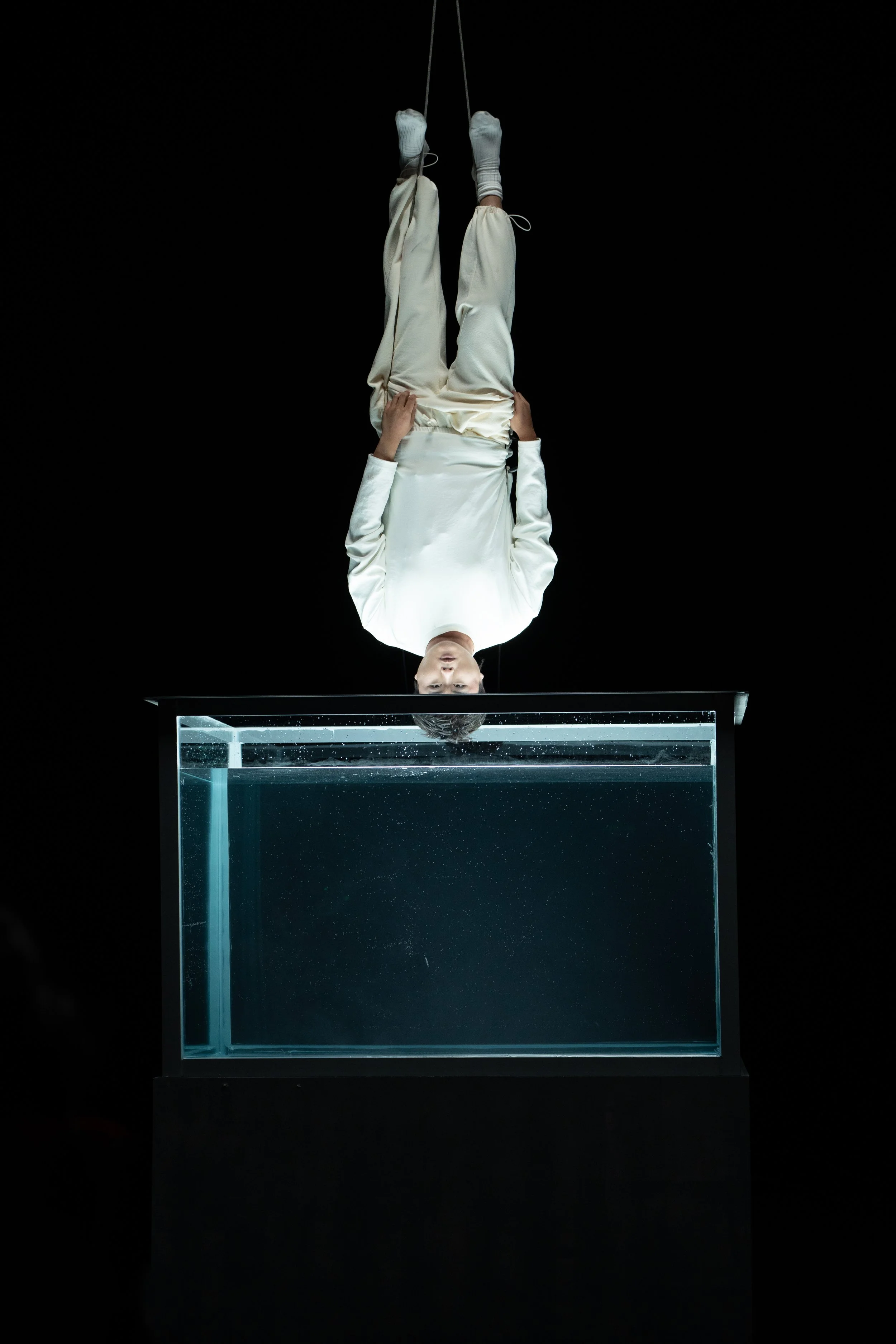
FALL begins with a simple gesture: a body suspended, descending, approaching water.
In the work, my body is hung upside down above a water tank and slowly lowered under controlled conditions. The action is repeated seven times. In the first six descents, the body consistently stops at the surface—occupying a threshold that is continuously approached but never crossed. This repetition establishes both a rhythm and a structure: proximity is not natural, but produced, permitted, and interrupted.
At the beginning, I desired this contact. It carried projections of intimacy, attachment, and a certain willingness to move toward the other. However, through repetition, the body begins to change. Desire is gradually exhausted and turns into resistance. What once felt like an active movement becomes something the body is made to undergo.
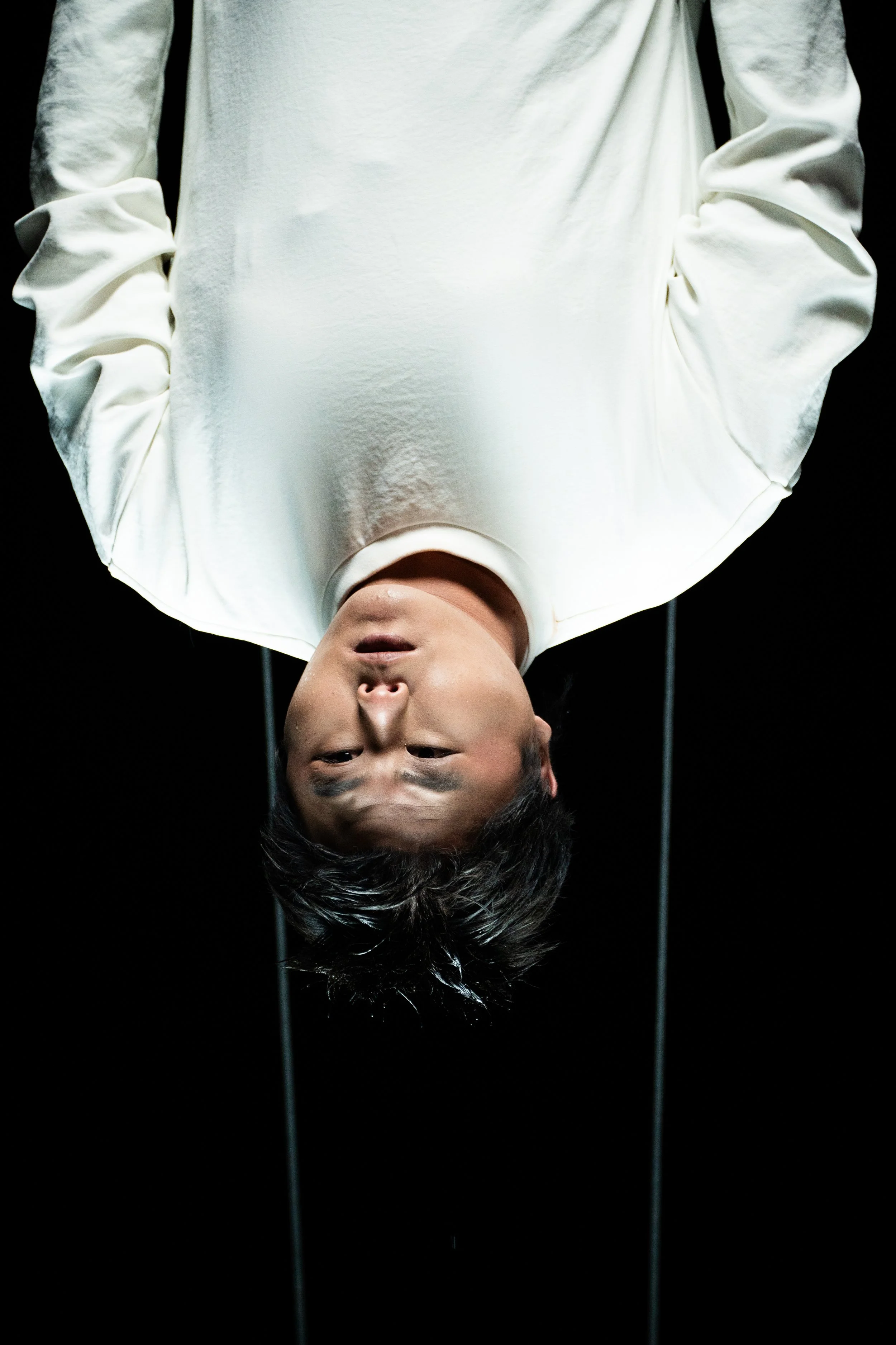
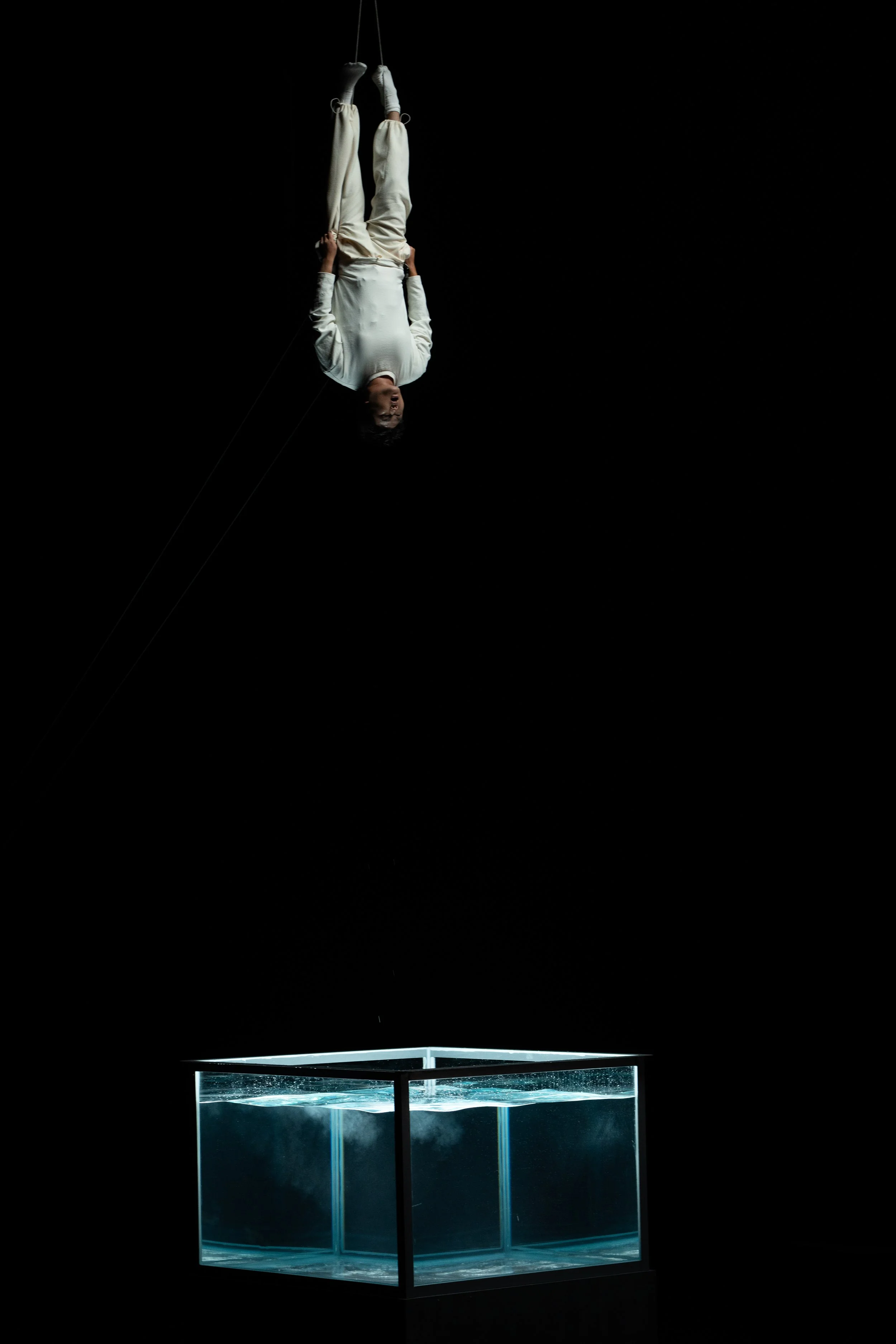
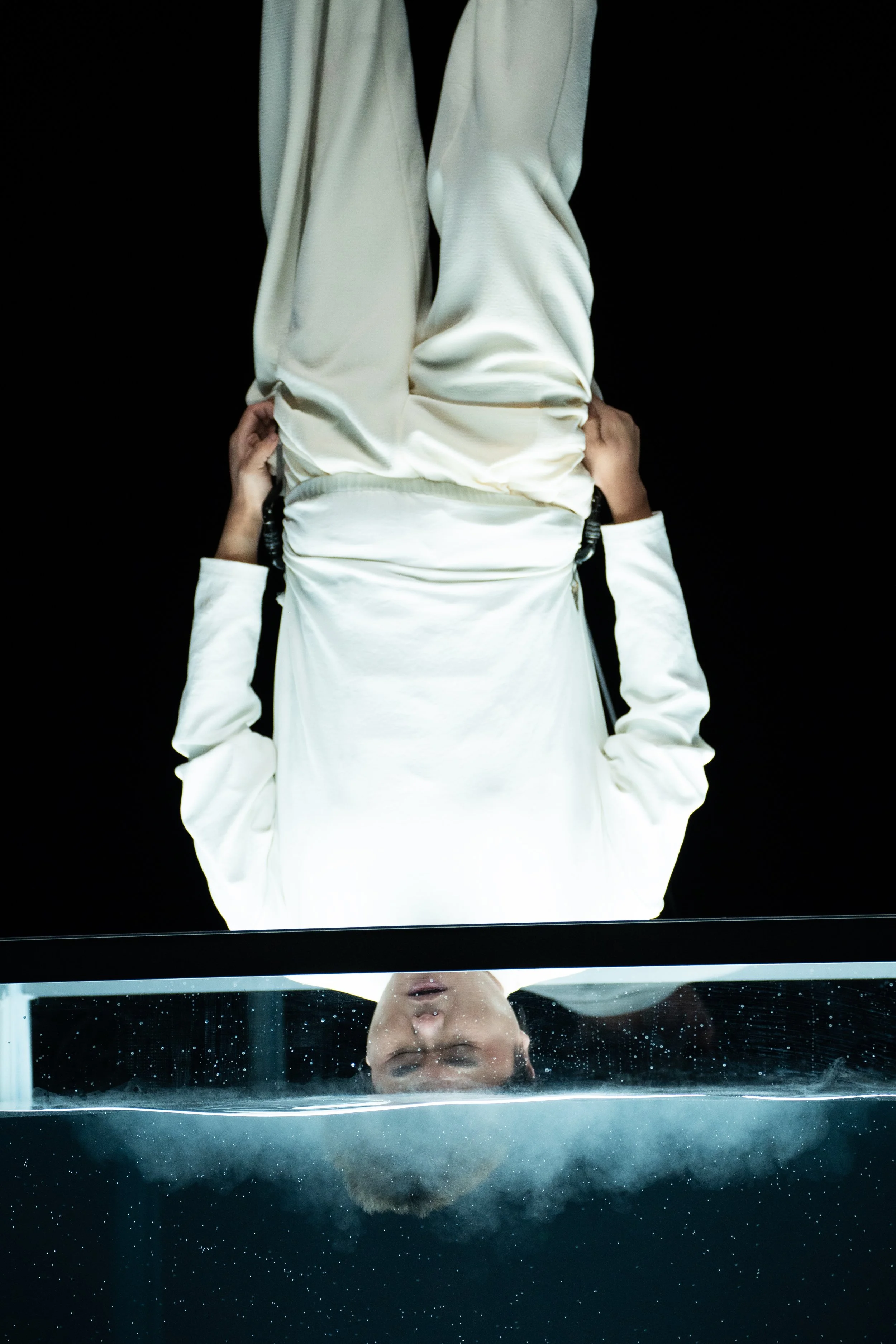
FALL is therefore not about the final moment of entering the water, but about a cyclical mechanism: descent, suspension, withdrawal, and repetition. Across the six repetitions, desire is repeatedly generated through approach, extended through delay, and weakened through interruption.
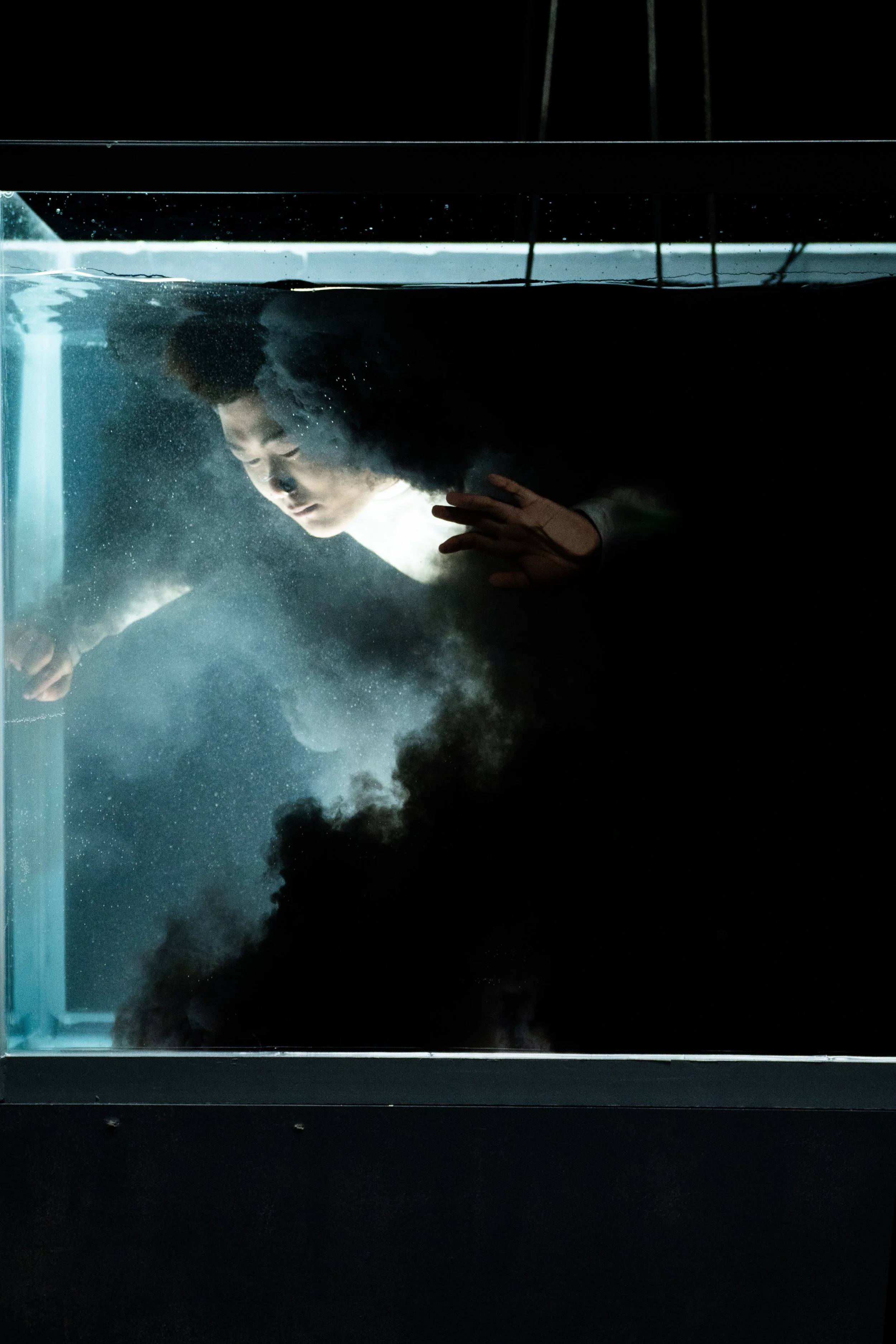
In the seventh descent, the body finally enters the water. The liquid turns dark, obscuring vision and destabilizing perception. This is no longer an act of approaching, but one of being engulfed. When I emerge, my body shifts from inversion to an upright position, marking a transformation in orientation and state.
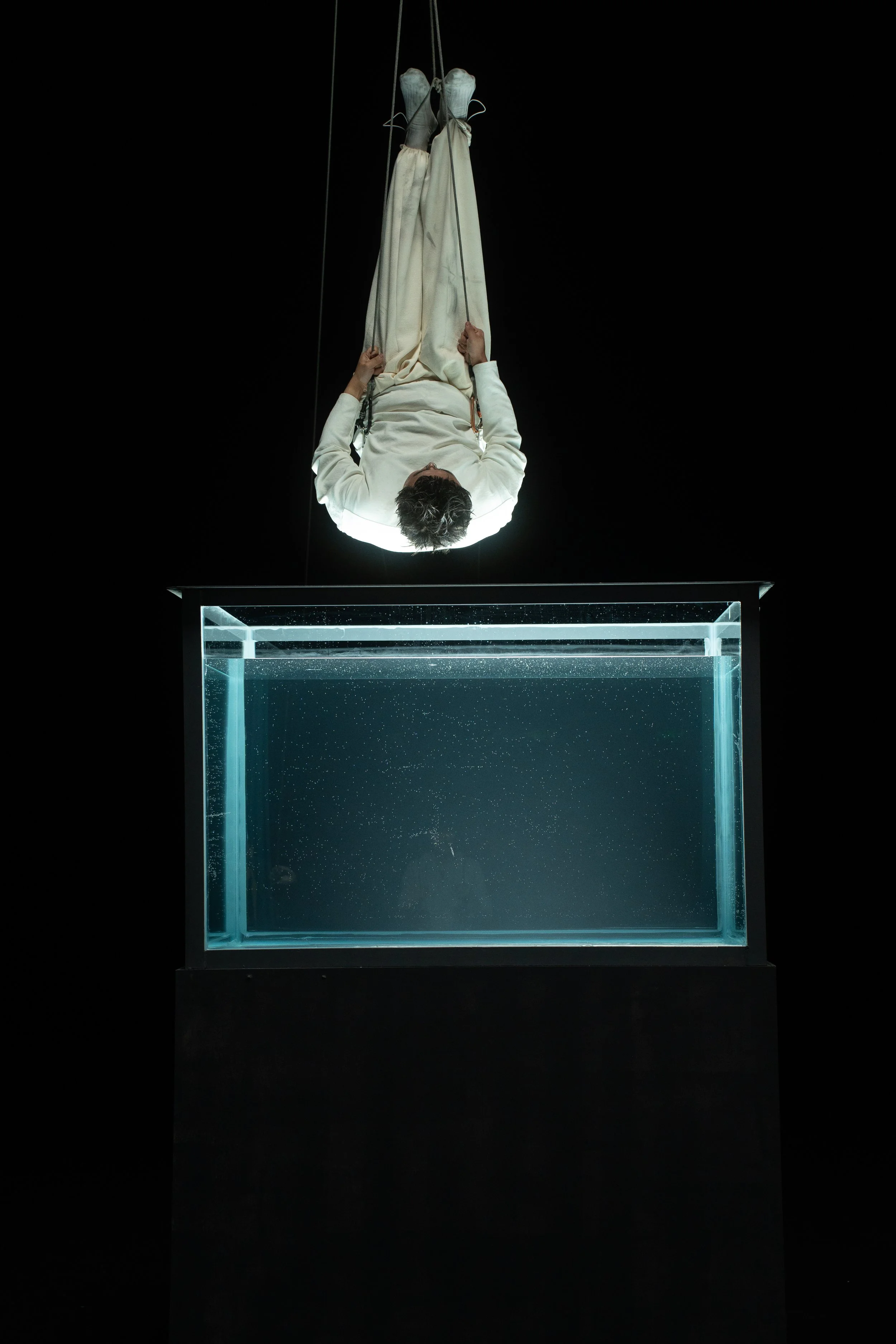
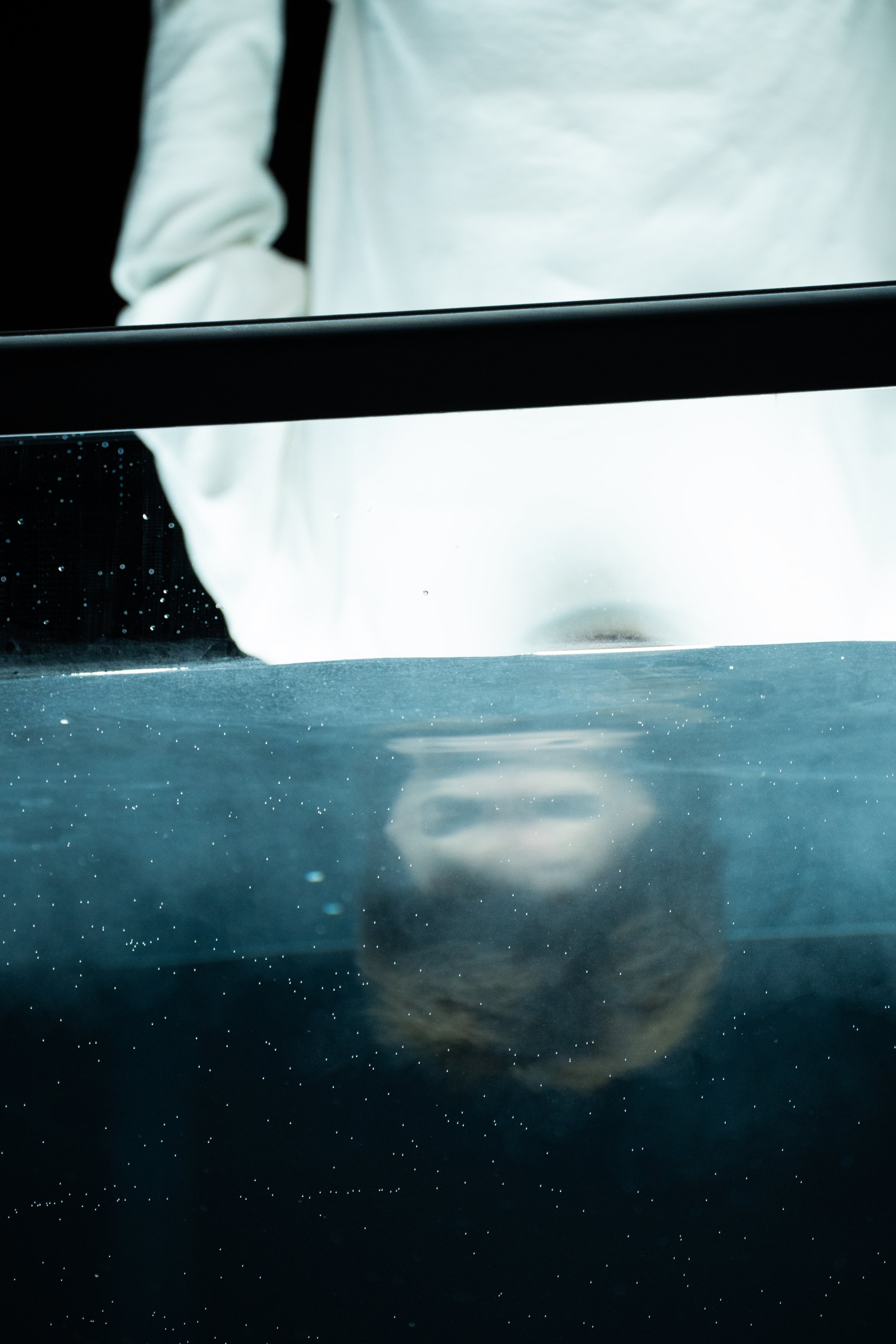
If the first six iterations reveal how desire is structured and depleted, the seventh introduces a rupture—an irreversible crossing and a reorientation.
Water functions here both as medium and boundary. It sustains life while suggesting suffocation; it is both the object of desire and a space of refusal. Through the relationship between body and water, FALL engages with the ambiguous, contradictory, and sometimes oppressive dynamics embedded in intimacy.